Chimney Repairs Elgin
Chimney repairs that protect your roof and keep small faults from turning into bigger problems.
Chimney Repairs in Elgin
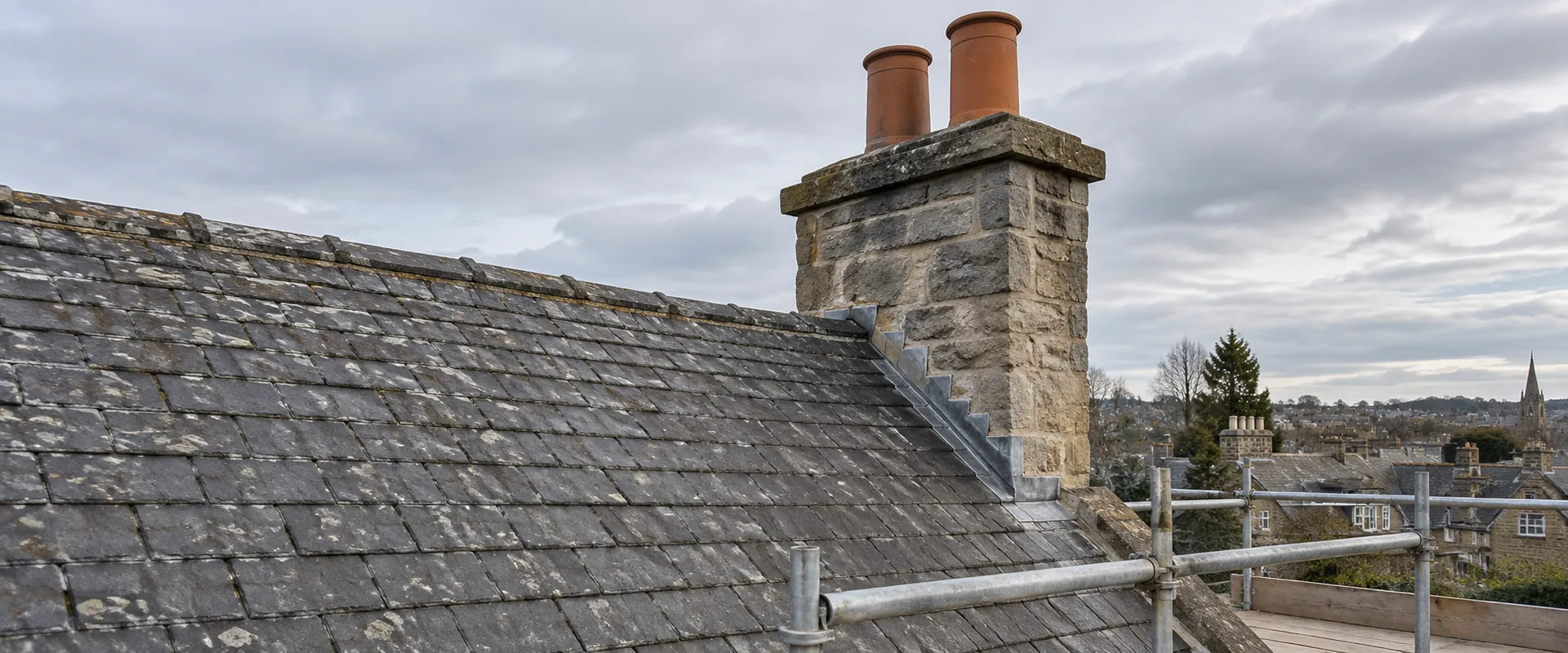
At our roofing company in Elgin, we repair chimneys and assess the stack, flashing and pointing so we can recommend practical work based on the condition found.
That approach helps us focus on the parts that need attention and avoid unnecessary work. Where repairs are suitable, we will explain the options clearly and prepare a written quotation for the agreed scope.
Common Chimney Faults
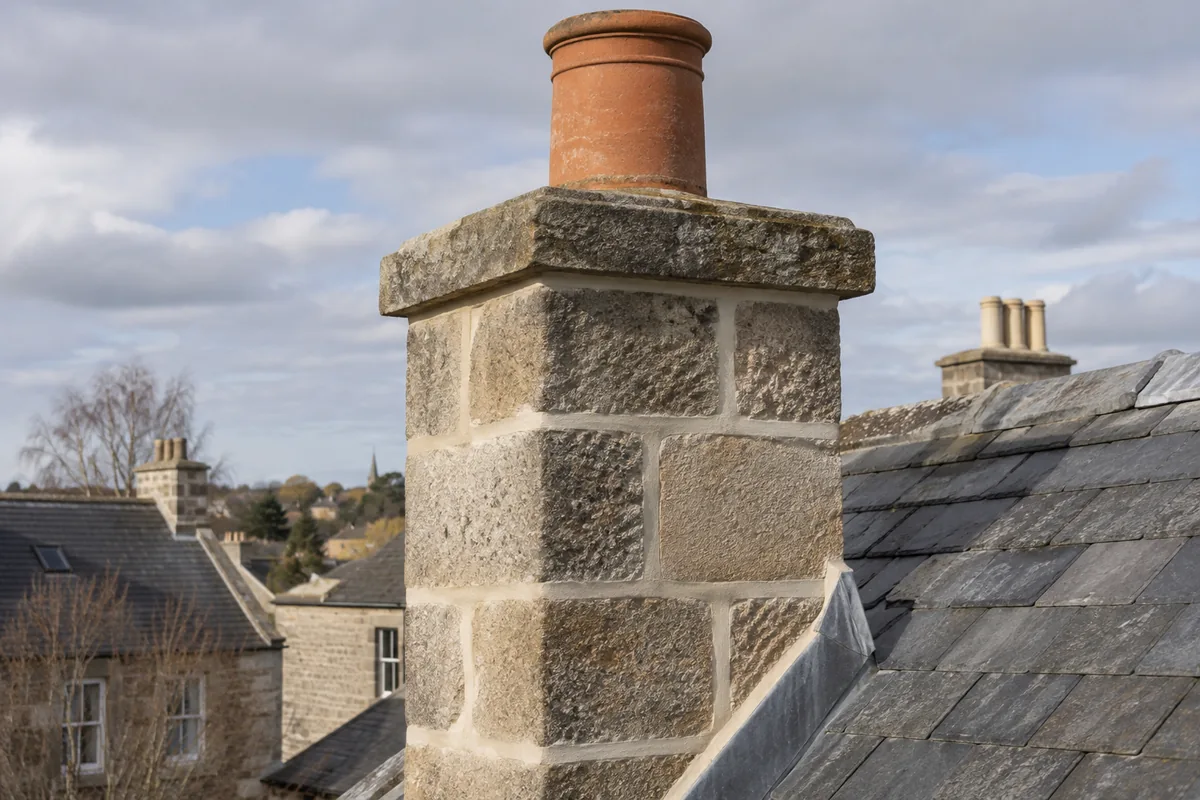
A chimney should be checked for cracked mortar, loose bricks, failing joints, damaged cappings and signs that the stack is moving or breaking down. Those faults can affect how well the chimney stands up to weather and how well it sheds water.
We also look at the surrounding roof area, because damage to nearby materials can make a chimney problem seem worse than it is. A careful inspection helps confirm whether the repair should be limited to the stack itself or include related roof details.
Flashing and Flaunching
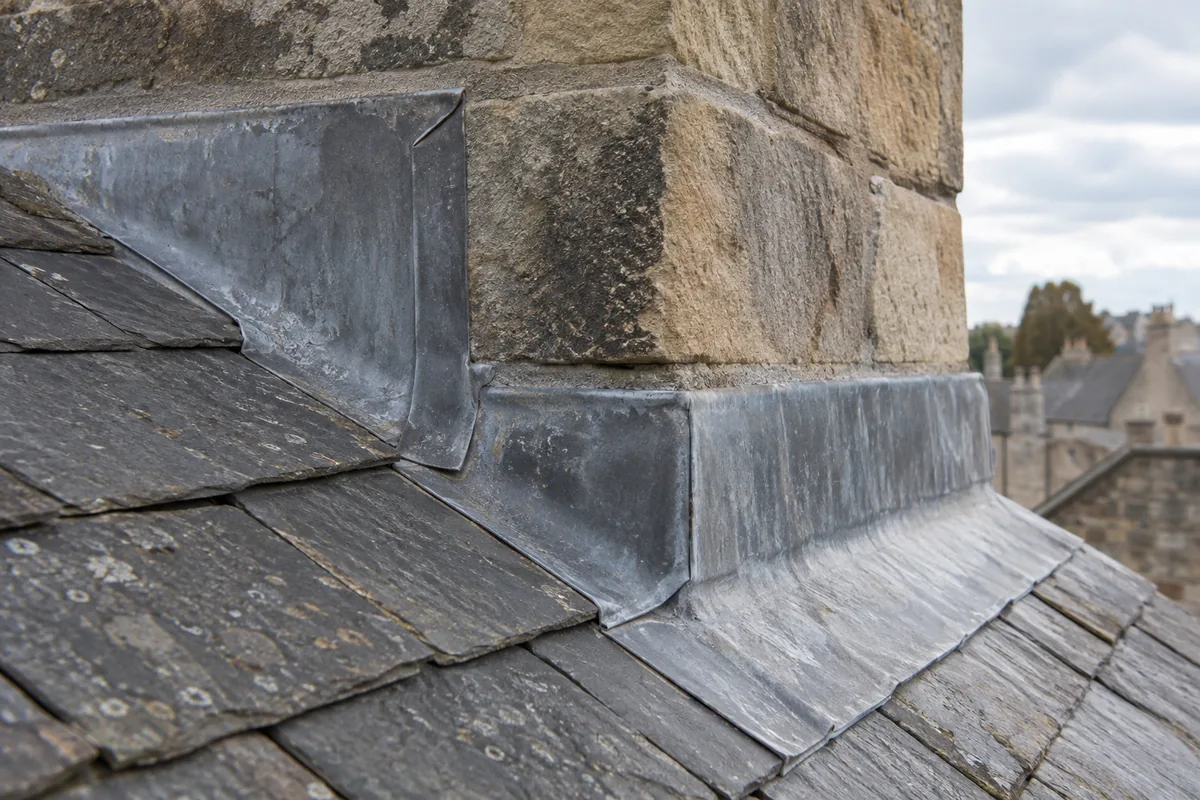
Flashing and flaunching both help keep the junction between the chimney and roof weather-tight, so their condition matters when leaks or staining are found. If either part has cracked, lifted or deteriorated, water can work its way into the roof structure.
The right fix depends on what has failed and how extensive the damage is. In some cases a targeted repair is enough, while in others the chimney junction needs more involved work to restore a sound seal.
Chimney Leaks
A chimney leak is best traced by checking the stack, the flashing, the top of the chimney and the roof area around it. Water can travel before it shows inside, so visible dampness does not always point to the exact entry point.
Because of that, the repair should follow a proper inspection rather than guesswork. Once the source is understood, the work can be matched to the fault instead of treating only the symptom.
Repointing or Rebuilding a Chimney
If the mortar joints have weathered but the chimney structure is still sound, repointing may be the appropriate response. That restores the joints and helps the stack remain stable without replacing more than is necessary.
If the brickwork is severely damaged, unstable or beyond practical repair, rebuilding part or all of the chimney may be the better option. We assess the condition first so the proposed scope reflects what the chimney actually needs.
Common Chimney Repairs Questions
What are the common signs of chimney damage?
Common signs include cracked or missing mortar, loose bricks, visible leaning, damp patches near the chimney and deterioration at the top of the stack. You may also notice staining on internal ceilings or walls near the chimney line.
These signs do not always mean the same repair is needed, which is why the chimney should be inspected before any work is agreed. That helps identify whether the issue is localised or part of a wider failure.
Can damaged chimney flashing cause a leak?
Yes. Damaged flashing can let water enter where the chimney meets the roof, and that often shows up as a leak even when the chimney itself looks otherwise sound. Because the junction is exposed, small defects can quickly become noticeable inside.
The source should still be checked carefully, because leaks can travel from one point to another before they become visible. An inspection helps confirm whether the flashing is the cause or whether another chimney detail needs attention.
When does a chimney need rebuilding?
A chimney may need rebuilding when the structure is no longer stable, the brickwork has failed over a wide area or repeated repairs are no longer a sensible solution. Severe movement, heavy decay or substantial loss of material are all reasons to consider that step.
Where the problem is limited to damaged joints or a smaller section of masonry, repointing or a local repair may be enough. The decision should follow an assessment of the chimney’s actual condition.
Contact Roofing Company Elgin
Tell us what’s happening with your roof and request an on-site roof survey.